🌏 繁體中文版
As you gain height on Insubong, Seoul gradually opens up behind the trees. This granite peak in Bukhansan National Park makes a city stay and a full day of multipitch climbing possible on the same trip. A subway connection to the foot of the mountain, however, does not make it an introductory outdoor lead venue.
This guide helps you decide whether Insubong suits your team, when to go, how to approach without a car, and how the 93 routes on the east, south and west faces compare.
This is a route-selection guide, not a topo. Once you have chosen a route, read the Insubong pitch-by-pitch route notes for where it starts, how long each pitch is and which pitch is the crux. That page also lists where to find the Korean community's hand-drawn topos and photo topos.
What kind of crag
인수봉 appears in English as Insubong or Insu-bong. It is the climbing peak, distinct from Baegundae (백운대), the neighboring summit reached by a popular hiking trail. Both names matter when navigating: reach the Baegundae trailhead first, then follow the approach toward Insubong.
The granite offers cracks, friction slabs, chimneys and steeper face climbing. Many routes require removable protection alongside fixed bolts and belay stations. A few visible bolts do not make a route suitable for a rack of quickdraws alone.
The master index in the 2012 Climb: Rock Climbing in Korea lists 51 routes for Insubong. Mont Blanc Lines' 2025 East Face topo has 43 numbered lines. One covers the broader crag in an older guide; the other selects lines on one face. The difference does not tell us how many routes have been added or removed.
The appeal is a full granite multipitch day while staying in Seoul. You still need to manage route finding, protection, team speed and the descent. Being able to climb 5.8 is different from leading a team through a 5.8 multipitch route. For a first visit, a partner or local guide familiar with your specific route and descent is more valuable than simply choosing the lowest number.
When to go
Rick Ruffin's account hosted by the Korean Alpine Club recommends spring and autumn, broadly mid-March through June and September through November. July and August are hot and wet; winter is cold. This is an undated historical account, useful for broad seasonal tradeoffs. Spring climbing still depends on that year's thaw restrictions.
The same account describes predominantly east-facing routes, with south- and west-facing options. The East Face receives morning sun: useful on a cold day, less comfortable in warm weather. Changing faces to escape the sun also changes the approach, route finding and potentially the descent. Decide that before setting out.
For an initial trip, aim for a dry spring or autumn day, then choose the date around access, temperature and wind. Winter adds icy approaches as well as cold hands: KNPS specifically warns of ice and the need for traction on the Baegundae hiking route. A sunny climbing face does not remove that approach problem.
Allow more time on weekends. Both the 2012 guide and the 2025 topo publisher describe crowds, and delays on popular lines affect your descent as well as the climb. Choose a weekday when possible and agree on a turnaround time before leaving the ground.
Getting there
Public transport
The official Seoul tourism page, checked in October 2026, directs visitors to Exit 2 of Bukhansan Ui (북한산우이), the terminus of the Ui–Sinseol Line. It also suggests a taxi from the station to the Baegun Visitor Center. Show the driver 백운대탐방지원센터, the Korean name of the Baegundae trailhead facility, rather than asking only for Bukhansan.
The tourism page's five-minute walk is to the Seoul Hiking Tourism Center, not the cliff. A taxi saves an uphill paved approach with climbing gear; the KNPS Baegundae course page lists roughly 2 km between the Ui area and Doseon Plaza.
KNPS gives 0.8 km and about 30 minutes from Baegundae Visitor Support Center to Harujae (하루재). Continue toward the Insu area, then use a route-specific topo for the final approach to your chosen face. The official page's full 1.9 km, 90-minute itinerary goes to the Baegundae hiking summit; it is not a universal approach time for Insubong climbs.
Driving
Locate 백운대탐방지원센터 / 도선광장 on the Ui side before setting out. Bukhansan has multiple entrances: reaching the same national park from another direction can leave you far from your intended East Face approach.
Parking
The entrance is near Doseonsa Temple, but temple-area parking should not be assumed to be an unrestricted all-day climbers' car park. The official course page checked in October 2026 does not establish current capacity or climber parking conditions. Confirm those with the manager before driving. KNPS also warns of crowds during major temple events. For a climbing-focused visit, subway plus taxi is a straightforward starting plan.
Watch the west-face approach POV (Pigeon / Lonely Road)
west-face approach (Pigeon / Lonely Road) · POV from Doseonsa plaza to the west-face base, with GPX · 어푸어푸어프로치
Rules before you go
Check notices for the named cliff and approach trail. The KNPS Bukhansan control page identifies specific affected areas. The partial restriction checked in October 2026 concerned a trail around Gucheon Valley, not a blanket closure of Insubong. Equally, a park remaining partly open does not prove your particular approach and cliff are open.
Recheck thaw notices before a spring trip. A 2026 notice reproduced by the Seoul Alpine Federation explicitly included Insubong and allowed changes depending on weather. It was that year's arrangement, not a recurring calendar to copy into a future itinerary.
Ask the Bukhansan office about the current declaration process. KNPS has a general rock-use application service, but its generic procedure does not establish how Insubong is currently handled. A 2025 Monthly Mountain report quoted KNPS describing the Bukhansan system at that time as voluntary reporting. Confirm the current named-rock requirements and how visitors without Korean mobile verification can comply. Do not transplant another national park's permit rules.
Fixed hardware also needs a current assessment. The 2012 guide warns about old bolts and runouts, while the 2025 topo records newer chained anchors. Neither guarantees every station you will encounter. Bring protection for the selected route and establish the ascent, rope configuration, descent and retreat options before leaving the ground. The route lengths below are not rappel-rope instructions.
At about 11 a.m. on 4 October 2026, a woman in her sixties fell about 30 m while climbing near Insubong; she was flown to hospital by a fire-service helicopter and died (KBS, Yonhap). The reports do not name the route, and police are still investigating the cause.
For an emergency, call 119; the National Fire Agency's EMS information explicitly includes foreigners. Save the Korean crag and route names and offline maps, and preserve phone battery. Ask your own insurer whether trad climbing, multipitch climbing, search and rescue, medical treatment and repatriation are covered. A general travel-insurance label is insufficient: the BMC product summary, for example, specifies activity eligibility and exclusions. Your own policy controls your coverage.
Routes by level
YDS and V-grade conversions follow the Mountain Project international grade comparison chart and are approximate; "approx." marks grades the sources give without a/b/c (such as 4 or 5+). The original grade is the one that counts.
This section puts every Insubong route with a findable grade into one set of grade tables: 93 routes. The "Sources:" at the start of each row’s notes lists the data that row uses, linked straight to the page: the 2025 East Face topo (43 numbers, 31 graded; 35 rows here), the 2012 GIN guide Insubong route table (printed pp. 233–237; 51 rows), theCrag (96 entries; 84 rows) and Mountain Project (26 routes; 22 rows), with the old south and southeast lines also checked against Monthly Mountain and the Imgok site. Korean-language data sits in each row’s "Korean sources:": 걸리’s community route table (2018) (the 도랫굽이 2012 and Daum café 2014 copies are the same table and count once), MOUNTAIN magazine’s 2004 southeast-face route poster, the hyedoji71 Daum café route posts (2014), the WAC (우정산악회) and NEPA photo topos, 산빛 Alpine Club’s 2012 redraw of the 2008 《사람과 산》 guidebook topos, and Monthly Mountain’s 2004 column on new routes. The Korean guidebook 《한국의 암벽》 (2012) covers Insubong but has no publicly readable pages; the 2008 《사람과 산》 is readable only through redrawn topos; and 《한국암장순례-중부권》 (2004) could not be read, so the Monthly Mountain column it drew on is used instead. Where sources disagree on grade or length, both are shown: the Grade column follows the 2025 topo, or the 2012 guide where the topo has no entry, theCrag and MP figures sit in the notes as "theCrag gives" and "MP gives", Korean data under "Korean sources:", with "hardest pitch" marking tables that grade pitch by pitch. Routes in only one source are still listed, with that source named, and their lengths and pitch counts describe that version only. "East Face #N" in the Sector column is the 2025 topo number; "Not located in the guide" and "Not located" mark lines the sources give no position for, mostly 10–40 m single pitches that video descriptions often place near Journey (여정길) on the south face, so find them with the guide or the route board at the base. A leading "2025 ✓/—" in Notes says whether the route appears on the 2025 East Face topo; "—" does not mean the route is missing, only that the topo has no entry under that name: Pigeon and Villa lie off the East Face, while Insu B is on it but split across Crony (#3), Sanggongsa (#4) and Yongam Slab (#6).
Not in the tables: the ungraded slab variations on the 2025 topo (Tae Slab, Tae Slab 1/3, Toremi Slab, Oiji, Ujŏng Slab, Suho, the Ujŏng A slab variation); theCrag’s ungraded 우정 M, 우정 C, 영희야 놀자, 철수야 놀자 and 알프스, plus three unnamed lines (an approach slab at 5.10c/d, a 5.9 short line and a 5.10 arête); an unnamed V5 boulder on MP; 귀바위슬랩, 창가방 가는 길, 환상길 and 써미트길, which the Korean sources name without grades; and an untitled WAC topo (5.11b A0, 146 m / 4 pitches). theCrag lists the three “알프스 산악회 연습바위” lines twice, and they are counted once here.
The "Route logs" at the end of each note are firsthand blog reports from Korean climbers. They add moves, time and field texture; grades and pitch counts stay with the rest of the row. The most common entry point is 걸리’s blog “구름에 달가듯이” Insubong concept map (2018), with whole-face route numbering and per-pitch tables; the Daegu WITH Climbing Center re-posted the same set in its Daum café in 2014, and 도랫굽이’s front-face diagram (2012) is from the same family. These are versions of one compilation, not independent confirmations.
These sources already use YDS, which is retained rather than reverse-converted to French grades; the YDS column repeats the original grade without a conversion. A multipitch grade describes climbing difficulty; A0, A1 and A2 denote aid and must not be dropped. Lengths and pitch counts mainly come from the 2012 guide and identify that version, rather than supplying current pitch or descent instructions.
Videos sit with their routes in the tables; select a thumbnail to open that route's list. Watch for version differences: two of the Insu A clips climb the 인수A 변형 (variation), not the original four pitches in the 2012 guide; the Wand clip is a three-pitch free version, not the guide's four-pitch length; and the Maninbo clip is a solo ascent without a belayer, whose description says he often uses ascenders, rather than demonstrating a conventional lead. Grades and route names in a video title describe that video's version; use the source column in the table to choose the line.
Beginner: up to 6a (YDS 5.10a and below)
For the easiest line, start with Lonely Road: theCrag calls it the easiest route on Insubong, 5.6 in six pitches. Pigeon is only a grade harder, but its third pitch is aid, so it is not a free route, and it is the main descent line. For classic moderate granite multipitch, compare Insu A and Chouinard B: both sources give 5.8; the old guide’s Insu A is shorter, and on the longer Chouinard B a team’s pace shows more. Crony and Insu Ridge are both 5.9, but Crony runs nine pitches and Insu Ridge is the peak’s only ridge, so they ask for a long multipitch rhythm; Rescuer is only 5.10a A0 yet has twelve pitches, where time and retreat planning matter more than the grade. "Beginner" here is a grade band, not advice for a first outdoor climb.
| Route | Grade | YDS | Length / pitches | Sector | Notes | Videos |
|---|---|---|---|---|---|---|
| Gwibawi / 귀바위 | A1 | — | 40 m / 2 pitches | Southeast face, Ear Rock (2004 poster) | Sources: theCrag, hyedoji71 2014, 2004 poster. Grade follows theCrag; it has an aid grade but no free grade, and sits in this band only so it is listed. Korean sources: hyedoji71 2014: hardest pitch A1, 40 m, 2 pitches; 2004 poster: 40 m, 2 pitches. | — |
| Lonely Road / 고독의 길 | 5.6 | 5.6 | 350 m / 6 pitches | Far right of the East Face (past Chouinard A) | Sources: 2025 topo #38, theCrag, hyedoji71 2014, 2004 poster. 2025 ✓; listed in the 2025 topo as #38, also 5.6; not in the 2012 guide, and the 350 m / 6 pitches come only from theCrag. theCrag calls it the easiest route on Insubong. theCrag gives 5.6, 350 m, 6 pitches. Korean sources: hyedoji71 2014: 350 m; 2004 poster: 5.6, 5 pitches. pitch notes |  full ascent from the team · 맥클라이밍 |
| Sŏlkyobyŏk (Crack) / 설교벽 (크랙) | 5.6 | 5.6 | — | Back side (2025 East Face #42) | Sources: 2025 topo #42. 2025 topo only, no length given; a different line from the slab of the same name (#41), and not Insu B. | — |
| Southeast-Side Great Chimney / 동남면대침니 | 5.6 | 5.6 | 70 m / 2 pitches | Southeast face | Sources: 2012 GIN guide p.237, theCrag, community table 2018, WAC topo, hyedoji71 2014, 2004 poster. Grade follows the 2012 guide; both pitches 5.6 (30 / 40 m), chimney climbing throughout. theCrag gives 5.7, 2 pitches. Korean sources: community table 2018: hardest pitch 5.6, 70 m, 2 pitches; WAC topo/2004 poster: 5.9, 70 m, 2 pitches; hyedoji71 2014: hardest pitch 5.9, 70 m, 2 pitches. | — |
| Insu C / 인수C | 5.6(theCrag); 5.7+(MP) | 5.6 / 5.7+ | 52 m / 4 pitches (theCrag); 100 m / 3 pitches (MP) | Southwest face (도랫굽이 concept map) | Sources: theCrag, Mountain Project, hyedoji71 2014. The two databases differ on grade and length; MP titles it mosagil (인수c). Neither the 2012 guide nor the 2025 topo lists it. Korean sources: hyedoji71 2014: hardest pitch 5.7, 100 m, 3 pitches. | — |
| Uiam Spire | 5.6 | 5.6 | 45 m / 4 pitches | Not located | Sources: Mountain Project. Mountain Project only, filed under the Insubong area; the name suggests a separate small spire, location not checked. | — |
| Pigeon / 비둘기 (Pigeon Route) | 5.7 A0 (theCrag); 5.6 A1 (2012) | 5.7, plus A0 | 89 m / 4 pitches | South side (by the descent point) | Sources: 2012 GIN guide p.237, theCrag, Mountain Project, community table 2018, WAC topo, NEPA topo, hyedoji71 2014. 2025 —; both sources list it but disagree on the aid rating (A0/A1); the third pitch is aid. This is also the descent line. theCrag gives 5.7 A0, 89 m, 4 pitches; MP gives 5.7 A0, 88 m, 4 pitches. Korean sources: community table 2018: hardest pitch 5.7, 89 m, 4 pitches; WAC topo: 5.7 A0, 89 m, 4 pitches; hyedoji71 2014: hardest pitch 5.7 A0, 89 m, 4 pitches. pitch notes |  university club ascent · 권코몽클라이밍tv |
| Hanyang Univ. Route / 한양대 길 (후면오버행) | 5.7 A2 | 5.7, plus A2 | 85 m / 4 pitches | Back side (rear overhang) | Sources: theCrag. theCrag only; includes A2 aid, so it is not a free route. | — |
| Insu A / 인수 A | 5.8 (hardest) | 5.8 | 115 m / 4 pitches | East Face | Sources: 2025 topo #26, 2012 GIN guide p.234, theCrag, Mountain Project, community table 2018, WAC topo, NEPA topo, hyedoji71 2014, 2004 poster. 2025 ✓; length from 2012 guide; 2025 topo also gives 5.8. theCrag gives 5.8, 120 m, 4 pitches; MP gives 5.8, 91 m, 4 pitches. Korean sources: community table 2018: hardest pitch 5.8, 115 m, 4 pitches; WAC topo/2004 poster: 5.8, 115 m, 4 pitches; hyedoji71 2014: hardest pitch 5.8, 115 m. pitch notes |  route guide to Insu A, climbed in 2016 · 맨발의청춘 |
| Chouinard B / 취나드 B | 5.8 (hardest) | 5.8 | 2012 version: 177 m / 5 pitches | East Face | Sources: 2025 topo #29, 2012 GIN guide p.234, theCrag, Mountain Project, community table 2018, WAC topo, NEPA topo, hyedoji71 2014, 2004 poster. 2025 ✓; 2025 topo names Chouinard B–Kwibawi C; confirm the linkup and endpoint. theCrag gives 5.8, 180 m, 5 pitches; MP gives 5.8 PG13, 152 m, 5 pitches. Korean sources: community table 2018/hyedoji71 2014: hardest pitch 5.8, 177 m, 5 pitches; WAC topo: 5.8, 177 m, 5 pitches; NEPA topo: 5.8, 5 pitches; 2004 poster: 5.8, 197 m, 6 pitches. pitch notes |  English subtitles · 야생민짜 Wildminzza |
| Ujŏng B / 우정 B (Friendship B) | 5.8 | 5.8 | 105 m / 4 pitches | East Face #22 | Sources: 2025 topo #22, 2012 GIN guide p.234, theCrag, Mountain Project, community table 2018, WAC topo, NEPA topo, hyedoji71 2014, 산빛 2012, 2004 poster. 2025 ✓; 2012 guide pitches 5.6 / 5.8 / 5.6 / 5.7 (20 / 20 / 35 / 30 m); both sources give 5.8. theCrag gives 5.8, 110 m, 4 pitches; MP gives 5.8 PG13, 100 m, 4 pitches. Korean sources: community table 2018: hardest pitch 5.8, 105 m, 4 pitches; WAC topo/산빛 2012/2004 poster: 5.9, 105 m, 4 pitches; hyedoji71 2014: hardest pitch 5.8, 4 pitches. |  pitch 1 from the Oasis (2026) · 김성수 |
| Tae Slab 2 / 대슬랩 2 | 5.8 | 5.8 | — | East Face Great Slab #9 | Sources: 2025 topo #9. 2025 topo only, no length given. The topo also numbers Tae Slab, Tae Slab 1 and Tae Slab 3 on the same slab, without grades, so they are not listed here. | — |
| Sŏlkyobyŏk (Slab) / 설교벽 (슬랩) | 5.8? (as on topo) | 5.8? | — | Back side (2025 East Face #41) | Sources: 2025 topo #41. The 2025 topo itself prints "5.8?", so the grade is unsettled; single source, no length given. | — |
| Insu B / 인수 B | 5.9 (hardest) | 5.9 | 97 m / 3 pitches (2012, lower part only); MP 5 pitches / 136 m; several reports 6 to 8 | Left of the Great Slab | Sources: 2012 GIN guide p.237, theCrag, Mountain Project, community table 2018, WAC topo, hyedoji71 2014, 2004 poster, Saram-gwa San 2008. 2025 —; the topo's route list has no entry of that name: reports say it shares its start with Crony (#3), meets Sanggongsa (#4) higher up, and is now often entered via Yongam Slab (#6), so it is split across those numbers (inferred from text; the topo photo has no per-line numbers to check). The 3 pitches in the 2012 guide and Girly's table are only the lower part, not the whole route; see the route notes for the pitches. It is not the same route as the back-face Seolgyobyeok. theCrag gives 5.8, 210 m, 6 pitches; MP gives 5.9, 136 m, 5 pitches. Korean sources: community table 2018: hardest pitch 5.9, 97 m, 3 pitches; WAC topo/Saram-gwa San 2008: 5.8, 97 m, 3 pitches; hyedoji71 2014: hardest pitch 5.8, 97 m; 2004 poster: 5.8, 213 m, 6 pitches. |  the crack scene · Sofia Jin |
| Crony / 크로니 | 5.9 | 5.9 | 237 m / 9 pitches | East Face #3 | Sources: 2025 topo #3, 2012 GIN guide p.235, 산지니 2010, theCrag, Mountain Project, community table 2018, WAC topo, hyedoji71 2014, 산빛 2012, 2004 poster. 2025 East Face #3; opened by Crony Mountaineering Club (크로니산악회) in 1970. Older sources sometimes give 5.10a; the topo uses 5.9. The pitch-6 crack (about 21 m, the old write-up calls it "크로니의 백미", Crony’s finest) is the line’s signature; pitch 5 is the slab-pendulum. Descent uses a 50 m single rope four times. Route logs: 산지니’s 2010 climb log, which reprints a pitch-by-pitch description credited to 김용기’s climbing school. theCrag gives 5.8, 9 pitches; MP gives 5.10a, 236 m, 9 pitches. Korean sources: community table 2018: hardest pitch 5.9, 237 m, 9 pitches; WAC topo/산빛 2012/2004 poster: 5.10a, 237 m, 9 pitches; hyedoji71 2014: hardest pitch 5.10a, 237 m, 9 pitches. pitch notes |  all pitches, edited; university club team · 올라보라 |
| Insu Ridge / 인수리지 | 5.9 | 5.9 | about 215 m / 7 pitches | North ridge (2025 East Face #43) | Sources: 2025 topo #43, Monthly Mountain 2009, theCrag. 2025 East Face #43; follows the north ridge from about 630 m to the summit, the only ridge route on Insubong. About 4 hours for a team of three; two 60 m ropes, five quickdraws and one set of cams. An 8-pitch version also circulates: pitch 4 is 15 m of A0 down-climbing before the traverse to the opposite bolts, pitch 5 drops 8 m on rappel; pitch counting depends on where you start, hence 7 versus 8. Route logs: 청아’s eight-pitch diagram (2006); 도랫굽이 reprints the same text (2013). theCrag gives 5.9, 150 m, 12 pitches. pitch notes |  ridge ascent; the video does not label pitch count · 마굿간 클럽 |
| Yongam Slab / 용암슬랩 | 5.9 | 5.9 | — | East Face #6 | Sources: 2025 topo #6. 2025 topo only, no length given; the current way onto Insu B often starts here (see the Insu B row). | — |
| Ujŏng A / 우정 A (Friendship A) | 5.9 | 5.9 | 101 m / 4 pitches | East Face #8 | Sources: 2025 topo #8, 2012 GIN guide p.237, theCrag, Mountain Project, community table 2018, WAC topo, NEPA topo, hyedoji71 2014, 2004 poster. 2025 ✓; both sources give 5.9. The 2012 guide prints Daybreak’s (여명길) pitch line word for word, a layout error in the book itself, so only the total and pitch count are used. The topo also has #10, an ungraded Ujŏng A slab variation. theCrag gives 5.9, 140 m, 5 pitches; MP gives 5.9, 140 m, 5 pitches. Korean sources: community table 2018: hardest pitch 5.9, 101 m, 4 pitches; WAC topo: 5.9, 101 m, 4 pitches; hyedoji71 2014: hardest pitch 5.9, 101 m; 2004 poster: 5.9, 141 m, 5 pitches. |  2020 ascent · 인수봉 천번 오르기 |
| Geomak A / 검악 A | 5.9 A0 | 5.9, plus A0 | 86 m / 4 pitches | East Face (2012 map #05) | Sources: 2012 GIN guide p.235, theCrag, community table 2018, WAC topo, NEPA topo, hyedoji71 2014. Grade follows the 2012 guide; pitch 3 (20 m) is aid (A0); pitches 5.9 / 5.8 / A0 / 5.6. theCrag gives 5.11d A0, 86 m, 4 pitches. Korean sources: community table 2018: hardest pitch 5.11d, 86 m, 4 pitches; WAC topo: 5.11d A0, 86 m, 4 pitches; NEPA topo: 5.11d, 4 pitches; hyedoji71 2014: hardest pitch 5.11d A0, 86 m. |  autumn 2018 ascent; pitches covered not labelled · 헤드셰프캠핑카 |
| Kŏmak B / 검악 B | 5.9 A0 | 5.9, plus A0 | 114 m / 3 pitches | East Face #7 | Sources: 2025 topo #7, 2012 GIN guide p.237, theCrag, community table 2018, WAC topo, hyedoji71 2014, 2004 poster. 2025 ✓; both sources give 5.9 A0. In the 2012 guide the whole 40 m pitch 2 is A0. theCrag gives 5.9 A0, 110 m, 3 pitches. Korean sources: community table 2018/hyedoji71 2014: hardest pitch 5.9 A0, 114 m, 3 pitches; WAC topo: 5.9 A0, 114 m, 3 pitches; 2004 poster: 5.9, 114 m, 3 pitches. |  every pitch onsight, unedited, 1 h 37 min · Neodoor 신개념아웃도어 |
| Mosŏl / 모설 | 5.9 A0 | 5.9, plus A0 | — | East Face #32 (right of the Great Slab) | Sources: 2025 topo #32, 2017 concept map, 2004 poster. Grade follows 2025 topo; a 2017 community concept map draws it with Chouinard B, Biwon and Yangji (see the concept-map table in the pitch notes). Korean sources: 2004 poster: 150 m, 8 pitches. |  pitch 1 lead only (2019) · korea rock climbing |
| West Side Wall 3 / 서면벽 3 | 5.9 A0 | 5.9, plus A0 | 90 m / 4 pitches | West face | Sources: 2012 GIN guide p.237, theCrag. Grade follows the 2012 guide; pitches 2 and 4 include aid (A0). theCrag gives 5.10a A1, 90 m, 4 pitches. | — |
| Sumeon Byeok (Hidden Wall) | 5.9 | 5.9 | 76 m / 2 pitches | Not located | Sources: Mountain Project. Mountain Project only. | — |
| My Love Linda / 마이러브린다 | 5.9 | 5.9 | 20 m / 1 pitch | Not located | Sources: theCrag, hyedoji71 2014, Monthly Mountain 2004. Grade follows theCrag; single short pitch. Korean sources: hyedoji71 2014: hardest pitch 5.10b, 20 m, 1 pitch; Monthly Mountain 2004: 5.10b, 1 pitch. | — |
| Chouinard A / 취나드 A | 5.10a (2025 topo, hardest) | 5.10a | 181 m / 6 pitches (2012) | East Face | Sources: 2025 topo #36, 2012 GIN guide p.234, theCrag, Mountain Project, community table 2018, WAC topo, NEPA topo, hyedoji71 2014, 2004 poster. 2025 ✓; 2025 names Chouinard A–Kwibawi D. The 2012 overall grade is 5.10c but its listed pitches top out at 5.10a; its length is not spliced into the newer line. theCrag gives 5.10a, 180 m, 5 pitches; MP gives 5.10a, 4 pitches. Korean sources: community table 2018/hyedoji71 2014: hardest pitch 5.10a, 181 m, 6 pitches; WAC topo/2004 poster: 5.10a, 181 m, 6 pitches; NEPA topo: 5.10a, 6 pitches. pitch notes |  stops after pitch 4 · 쏘맥 클라이머 |
| Amidong / 아미동 | 5.10a | 5.10a | 7 pitches | East Face #1 | Sources: 2025 topo #1, 2012 GIN guide p.237, Today Shinmun 2014, theCrag, Mountain Project, community table 2018, WAC topo, hyedoji71 2014, 2004 poster. 2025 East Face #1; opened in 1963 by 이동일 of the Academy Mountaineering Club. No reliable total length was found, so only the pitch count is given; community route tables also list 90 m / 3 pitches. It starts on the left side of the East Face, between Crony and Insu B; pitch 3’s near-vertical crux has few holds. Route logs: 泰山峻嶺’s 2018 log, photos through pitch 5, where a broken foothold caused a 5 m fall at the start. theCrag gives 5.10c, 240 m, 7 pitches; MP gives 5.10a, 105 m, 3 pitches. Korean sources: community table 2018: hardest pitch 5.10a, 90 m, 3 pitches; WAC topo: 5.10a, 90 m, 3 pitches; hyedoji71 2014: hardest pitch 5.10a, 205 m; 2004 poster: 5.10a, 240 m, 7 pitches. pitch notes |  full route guide; climbed in 2017, with the rack listed · 맨발의청춘 |
| West-Side Slab / 서면슬랩 | 5.10a | 5.10a | 72 m / 2 pitches | West face | Sources: 2012 GIN guide p.237, theCrag, community table 2018, WAC topo, NEPA topo, hyedoji71 2014. Grade follows the 2012 guide; pitches 5.9 / 5.10a (35 / 37 m), slab. theCrag gives 5.10a, 72 m, 2 pitches. Korean sources: community table 2018/hyedoji71 2014: hardest pitch 5.10a, 72 m, 2 pitches; WAC topo: 5.10a, 72 m, 2 pitches. |  climbing-school graduation vlog; the route is in the middle · 쩡아TV |
| Kŏnyang / 건양 | 5.10a A0 | 5.10a, plus A0 | — | East Face #2 (2012 map #01) | Sources: 2025 topo #2, 2012 GIN guide p.233, theCrag, NEPA topo, hyedoji71 2014, 2004 poster. 2025 ✓; the 2012 guide numbers it on the map but gives no pitch data, so length is unknown. theCrag gives 5.10c A0, 130 m, 4 pitches. Korean sources: NEPA topo: 5.10b; hyedoji71 2014: hardest pitch 5.10bc A0, 130 m, 4 pitches; 2004 poster: 5.10bc, 130 m, 4 pitches. |  pitch 1 lead only (2018) · korea rock climbing |
| Medical School / 의대 | 5.10a A0 | 5.10a, plus A0 | about 100–136 m / 5–6 pitches | East Face #27 (from Oasis) | Sources: 2025 topo #27, 2012 GIN guide p.234, Monthly Mountain 2022, theCrag, community table 2018, NEPA topo, hyedoji71 2014, 2004 poster. 2025 East Face #27; opened in 1971 by the Seoul National University medical school club. Older route data gives 136 m / 6 pitches; a 2022 50th-anniversary report gives 5 pitches and about 100 m. Pitch 2 (5.10a) is the crux and pitch 3 includes aid. Many teams finish at pitch 5 (where 궁형길 and 취나드 B meet) and drop via the Oasis. Route logs: “소소한 기억들” 2009 climb retold in 2019, which gives max 5.10b with the hardest move at the first bolt; 머루랑’s 2013 log adds the first-ascent story and a six-pitch breakdown. theCrag gives 5.10a A0, 140 m, 6 pitches. Korean sources: community table 2018/hyedoji71 2014: hardest pitch 5.10b A0, 136 m, 6 pitches; NEPA topo: 5.10a, 6 pitches; 2004 poster: 5.10b, 136 m, 6 pitches. pitch notes |  from the 1971 first-ascent history to the climb; the description links the source article · 한호이 |
| Simu / 심우 | 5.10a A0 (2025); 5.9 A0 (2012) | 5.10a / 5.9, plus A0 | 99 m / 4 pitches | East Face #37 | Sources: 2025 topo #37, 2012 GIN guide p.234, theCrag, Mountain Project, Monthly Mountain 2016, Monthly Mountain 2016, community table 2018, WAC topo, NEPA topo, hyedoji71 2014, Monthly Mountain 2016, 2004 poster. 2025 ✓; the versions differ by a grade; the end of pitch 4 is aid. 2012 pitches 5.6 / 5.9 / 5.7 / 5.6 A0. theCrag gives 5.10a A0, 99 m, 5 pitches; MP gives 5.10a A0, 121 m, 4 pitches. Korean sources: community table 2018/hyedoji71 2014: hardest pitch 5.9 A0, 99 m, 4 pitches; WAC topo: 5.9 A0, 99 m, 4 pitches; NEPA topo: A0, 4 pitches; Monthly Mountain 2016: 5.9, 140 m, 5 pitches; 2004 poster: 5.9, 99 m, 4 pitches. |  pitches 1–2 guide (2023) · 유성Climb TV. |
| Rescuer / 구조대 | 5.10a A0 | 5.10a, plus A0 | 12 pitches / about 300–360 m | East Face #39 | Sources: 2025 topo #39, 파워 2013 summary, theCrag, hyedoji71 2014. 2025 East Face #39; opened in July 2010 by the Bukhansan police mountain rescue team, with 12 pitches of 25–30 m each. The topo gives 5.10a A0; the free version is about 5.11b. It has the most pitches, so time and retreat management matter more than the grade: a pair can take from about 5 hours to nearly 10, and a party ahead can mean about 20 minutes of waiting per pitch. Pitch 6 needs 12 quickdraws; from pitches 1–2 you can traverse off to 고독길 pitches 3–7; descent is four rappels down 의대길. Route logs: “킬러 & 山” 2013 full 12-pitch log; 파워’s 2013 digest. theCrag gives 5.10a A0, 12 pitches. Korean sources: hyedoji71 2014: hardest pitch 5.11b. pitch notes |  edited 12-pitch ascent; four-person team, description gives about 4.5 hours · 여행발자국동행 |
| Summit A / 써미트A | 5.10a | 5.10a | — | Not located | Sources: theCrag. theCrag only, no length given. | — |
| Wanderer / 나그네 | 5.10a A0 | 5.10a, plus A0 | 90 m / 3 pitches | Not located | Sources: theCrag, hyedoji71 2014. Grade follows theCrag. Korean sources: hyedoji71 2014: hardest pitch 5.9, 80 m, 2 pitches. |  three-pitch free version · 권코몽클라이밍tv |
| 기존 1번길 (알프스 산악회 연습바위) | 5.10a | 5.10a | 50 m / 2 pitches | Alps Alpine Club practice rock | Sources: theCrag. theCrag only; in theCrag’s “알프스 산악회 연습바위” sub-crag, with a duplicate entry of the same name and grade on the main Insubong page. | — |


Intermediate: 6a+ to 6c+ (YDS 5.10b–5.11c)
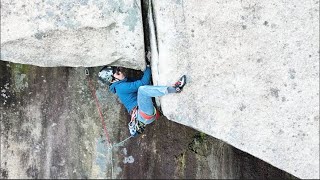
Consider Wand if slab difficulty is a priority; the versions differ by a grade, so leave margin for the harder description. PASI has back-to-back 5.10c on pitches 3 and 4, an endurance test for East Face 5.10 multipitch; Sanchonji and Yangji start around the Oasis, with cruxes on slab. Haneul-gil on the south face and Dongyang-gil on the southeast face are both 1969 lines; Dongyang-gil’s pitch 6 is aid, so it is not a free route. Plan Maninbo and the guide’s 10–20 m single pitches apart from a full-day multipitch objective rather than as another way to the summit.
| Route | Grade | YDS | Length / pitches | Sector | Notes | Videos |
|---|---|---|---|---|---|---|
| Wand / 봔트 | 5.10b (2025); 5.10c (2012) | 5.10b / 5.10c | 2012 version: 162 m / 4 pitches | East Face | Sources: 2025 topo #17, 2012 GIN guide p.237, theCrag, community table 2018, WAC topo, NEPA topo, hyedoji71 2014, 2004 poster. 2025 ✓; 2025 topo 5.10b versus 2012 guide 5.10c; length belongs to the old version. theCrag gives 5.10b, 160 m, 5 pitches. Korean sources: community table 2018/hyedoji71 2014: hardest pitch 5.10c, 162 m, 4 pitches; WAC topo/2004 poster: 5.10c, 162 m, 4 pitches; NEPA topo: 5.10a, 4 pitches. pitch notes | three-pitch free version · 권코몽클라이밍tv |
| Yŏng / 영길 (Young) | 5.10b | 5.10b | 40 m | East Face #24 | Sources: 2025 topo #24, 2012 GIN guide p.234, theCrag, community table 2018, hyedoji71 2014, 2004 poster. 2025 ✓; both sources give 5.10b; length from the Grade follows the 2012 guide. theCrag gives 5.10b. Korean sources: community table 2018: hardest pitch 5.10b, 40 m, 1 pitch; hyedoji71 2014: 40 m, 1 pitch; 2004 poster: 5.10b, 40 m, 1 pitch. |  shared with Medical School (2020) · korea rock climbing |
| Ŭnjŏng / 은정 | 5.10b A0 | 5.10b, plus A0 | — | East Face #33 | Sources: 2025 topo #33, theCrag, hyedoji71 2014, 2004 poster. Grade follows the 2025 topo; no length given. theCrag gives 5.10b A0, 95 m, 3 pitches. Korean sources: hyedoji71 2014: hardest pitch 5.10b A0, 95 m, 3 pitches; 2004 poster: 5.10b, 95 m, 3 pitches. |  pitch 1 only (2026) · 김성수 |
| Kyodae / 교대 | 5.10b | 5.10b | — | East Face #34 | Sources: 2025 topo #34. 2025 topo only, no length given. |  pitches 1–5, each said to be 5.11 or harder · 헤드셰프캠핑카 |
| West Side Wall 1 / 서면벽 1 | 5.10b | 5.10b | 78 m / 3 pitches | West face | Sources: 2012 GIN guide p.237, theCrag. Grade follows the 2012 guide; pitches 5.9 / 5.10b / 5.10a (15 / 25 / 38 m). theCrag gives 5.10b, 88 m, 4 pitches. | — |
| South Slab / 남측슬랩 | 5.10b | 5.10b | 75 m / 3 pitches | South side | Sources: 2012 GIN guide p.237, theCrag, community table 2018, WAC topo, NEPA topo, hyedoji71 2014. Grade follows the 2012 guide; pitches 1 and 3 are both 5.10b, the last one 40 m. theCrag gives 5.10b, 95 m, 4 pitches. Korean sources: community table 2018: hardest pitch 5.10b, 75 m, 3 pitches; WAC topo: 5.10b, 75 m, 3 pitches; hyedoji71 2014: hardest pitch 5.10b, 95 m. |  NEPA “Korean Rock” episode 9 (2012) · 네파 | NEPA |
| Decency Forbids / 소변금지 | 5.10b | 5.10b | 18 m | Mostly south face (community single-pitch table) | Sources: 2012 GIN guide p.234, theCrag, community table 2018, hyedoji71 2014, 2004 poster. Grade follows the 2012 guide; single short pitch. The guide lists it on one page with other 10–20 m lines; find it with the guide or the route board at the base. theCrag gives 5.9, 25 m. Korean sources: community table 2018: 5.10b, 18 m, 1 pitch; hyedoji71 2014: hardest pitch 5.10b, 25 m, 1 pitch; 2004 poster: 5.9, 25 m, 1 pitch. | — |
| Dongyang-gil / 동양길 | 5.10b | 5.10b | 209 m / 8 pitches | Southeast face | Sources: 2012 GIN guide p.235, Imgok 2012, theCrag, community table 2018, WAC topo, NEPA topo, hyedoji71 2014, 2004 poster. Southeast face; opened by Dongyang Mountaineering Club (동양산악회) in October 1969, first ascent by 이용대. Pitch 1 starts at 5.7, pitches 2 and 3 are 5.10b slabs, pitch 4 is a 35 m 5.8 crack, pitch 6 is aid and the last pitch is a 5.10a slab; it is not a fully free route. At pitch 5 you can turn left onto 거룡길, and many teams finish via 청맥길’s pitch-5 slab; in rain the cracks on pitches 3, 4 and 7 get wet; descend 비둘기길. The Imgok book piece (Korean Rock Routes (1), 2012, 조윤성) announces 8 pitches / 209 m but describes only seven; community route tables list the full 8-pitch breakdown. Route logs: the Imgok route-book piece; 泰山峻嶺 2022 full-route log, with photos of all eight pitches. theCrag gives 5.10b A0, 210 m, 8 pitches. Korean sources: community table 2018/hyedoji71 2014: hardest pitch 5.10b A0, 209 m, 8 pitches; WAC topo: 5.10b A0, 209 m, 8 pitches; NEPA topo: 5.10b, 8 pitches; 2004 poster: 5.10b, 209 m, 8 pitches. pitch notes | 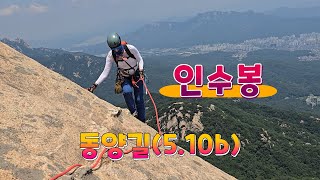 full 2025 ascent, labelled 5.10b · 고양이 삼촌 |
| Summit B / 써미트B | 5.10b | 5.10b | 2 pitches | Not located | Sources: theCrag. theCrag only, no length given. | — |
| Gang’s Chorus / 꾸러기들의합창 | 5.10 (no letter) | approx. 5.10 | 10 m | Mostly south face (community single-pitch table) | Sources: 2012 GIN guide p.234, theCrag, community table 2018, hyedoji71 2014. Grade follows the 2012 guide; the guide gives 5.10 without a/b/c; single short pitch. theCrag gives 5.10b, 15 m. Korean sources: community table 2018: 5.10, 10 m, 1 pitch; hyedoji71 2014: hardest pitch 5.10b, 10 m, 1 pitch. |  2026 ascent, labelled 5.10a · 김성수 |
| West Side Wall 2 / 서면벽 2 | 5.10 (no letter) | approx. 5.10 | 90 m / 2 pitches | West face | Sources: 2012 GIN guide p.237, theCrag. Grade follows the 2012 guide; both pitches given only as 5.10. theCrag gives 5.10 A1, 55 m, 2 pitches. | — |
| Indŏk / 인덕길 | 5.10 (2025); 5.11a (2012) | 5.10 / 5.11a | 119 m / 4 pitches | East Face #28 | Sources: 2025 topo #28, 2012 GIN guide p.234, theCrag, community table 2018, WAC topo, NEPA topo, hyedoji71 2014, 2004 poster. 2025 ✓; the topo gives only 5.10, the 2012 guide 5.11a, with the crux on the 40 m pitch 3. 2012 pitches 5.7 / 5.7 / 5.11a / 5.10b. theCrag gives 5.11a, 120 m, 4 pitches. Korean sources: community table 2018/hyedoji71 2014: hardest pitch 5.11a, 119 m, 4 pitches; WAC topo: 5.11a, 119 m, 4 pitches; NEPA topo: 5.11a; 2004 poster: 5.11a, 113 m, 4 pitches. | — |
| Sanggongsa / 생공사 | 5.10c | 5.10c | — | East Face #4 | Sources: 2025 topo #4, 2012 GIN guide p.233, theCrag, NEPA topo, hyedoji71 2014, Monthly Mountain 2004, 2004 poster. 2025 topo grade; the 2012 guide numbers it on the map but gives no pitch data. Insu B’s upper part joins this line (see the Insu B row). theCrag gives 5.11a, 260 m, 6 pitches. Korean sources: NEPA topo: 5.11a; hyedoji71 2014: hardest pitch 5.11a, 260 m; Monthly Mountain 2004/2004 poster: 5.11a, 260 m, 6 pitches. |  full route in 2025, labelled 5.11a, with some 검악B footage · 고양이 삼촌 |
| PASI / 패시 | 5.10c | 5.10c | 139 m / 5 pitches | East Face #20 | Sources: 2025 topo #20, 2012 GIN guide p.237, theCrag, community table 2018, WAC topo, NEPA topo, hyedoji71 2014, 2004 poster. 2025 East Face #20; pitches 3 and 4 are back-to-back 5.10c, alternating cracks and slabs. An endurance test for East Face 5.10 multipitch. Route logs: “킬러 & 山” 2010 log, all five pitches with technique notes on pitches 3 and 4. theCrag gives 5.10c, 140 m, 5 pitches. Korean sources: community table 2018/hyedoji71 2014: hardest pitch 5.10c, 139 m, 5 pitches; WAC topo/2004 poster: 5.10c, 139 m, 5 pitches; NEPA topo: 5.10c, 5 pitches. pitch notes |  ascent footage; uploaded in 2017 · 헤드셰프캠핑카 |
| Haneul-gil / 하늘길 | 5.10c | 5.10c | 190 m / 7 pitches | South face | Sources: 2012 GIN guide p.235, Monthly Mountain 2016, theCrag, Monthly Mountain 2016, Monthly Mountain 2016, community table 2018, WAC topo, NEPA topo, hyedoji71 2014, Monthly Mountain 2016. South face; opened by Ujeong Mountaineering Club in 1969. Pitches 1 and 2 are 5.10a cracks; pitches 5 and 7 are 5.10c. Pitch 1 is where most falls happen, not just the upper pitches. The 2012 guide gives 209 m and community route tables 187 m. Route logs: 채울 2022 log: the full-route plan became a single-pitch day, with the crack moves and first-bolt placement recorded. theCrag gives 5.10d, 7 pitches. Korean sources: community table 2018/hyedoji71 2014: hardest pitch 5.10c, 187 m, 7 pitches; WAC topo: 5.10c, 187 m, 7 pitches; NEPA topo: 5.10c, 7 pitches; Monthly Mountain 2016: 5.10c, 190 m, 7 pitches. pitch notes |  route finding and ascent on a KMGA club day · K Climbing Company |
| Journey / 여정길 | 5.10c | 5.10c | 191 m / 6 pitches | South face (video titles and descriptions) | Sources: 2012 GIN guide p.235, theCrag, Mountain Project, community table 2018, WAC topo, NEPA topo, hyedoji71 2014, 2004 poster. Grade follows the 2012 guide; the 19 m pitch 1 at 5.10c is the crux, then five pitches of 5.8–5.9. theCrag gives 5.10c, 7 pitches; MP gives 5.10+, 23 m. Korean sources: community table 2018: hardest pitch 5.10c, 101 m, 6 pitches; WAC topo/2004 poster: 5.10c, 191 m, 6 pitches; hyedoji71 2014: hardest pitch 5.10c, 191 m, 6 pitches. |  IRC series pitch 1 (2020); the channel has pitches 2–7 too · 유성Climb TV. |
| Jjambbong / 짬뽕 | 5.10c | 5.10c | 10 m | Mostly south face (community single-pitch table) | Sources: 2012 GIN guide p.234, theCrag, Mountain Project, community table 2018, hyedoji71 2014, 2004 poster. Grade follows the 2012 guide; single short pitch. theCrag gives 5.10a, 10 m; MP gives 5.10a, 8 m. Korean sources: community table 2018: 5.10c, 10 m, 1 pitch; hyedoji71 2014: hardest pitch 5.10a, 10 m, 1 pitch; 2004 poster: 5.10a, 10 m, 1 pitch. |  IRC route guide (2023) · 유성Climb TV. |
| Geobong / 거봉 | 5.10c A0 | 5.10c, plus A0 | 90 m / 4 pitches | Southeast face (2004 poster) | Sources: theCrag, hyedoji71 2014, 2004 poster. Grade follows theCrag. Korean sources: hyedoji71 2014: hardest pitch 5.10a A0, 90 m, 4 pitches; 2004 poster: 5.10c, 90 m, 4 pitches. | — |
| Geobong Touch / 거봉터치 | 5.10c | 5.10c | — | Southeast face (2004 poster) | Sources: theCrag, 2004 poster. Grade follows theCrag, no length given. Korean sources: 2004 poster: 5.10c, 33 m, 1 pitch. | — |
| 중앙 2번길 (알프스 산악회 연습바위) | 5.10c | 5.10c | 50 m / 2 pitches | Alps Alpine Club practice rock | Sources: theCrag. theCrag only; another line on the practice-rock sub-crag. | — |
| Minnam / 민남 | 5.10d | 5.10d | — | East Face #25 | Sources: 2025 topo #25, theCrag, 2004 poster. Grade follows the 2025 topo; no length given. theCrag gives 5.10d. Korean sources: 2004 poster: 5.10c~d, 35 m, 1 pitch. | — |
| Bŏt / 벗길 (Friend) | 5.10d A0 (2025); 5.11a A0 (2012) | 5.10d / 5.11a, plus A0 | 148 m / 5 pitches | East Face #35 | Sources: 2025 topo #35, 2012 GIN guide p.234, theCrag, community table 2018, WAC topo, NEPA topo, hyedoji71 2014, 2004 poster. 2025 ✓; the versions differ by a grade. The 2012 guide prints Daybreak’s pitch line word for word, a layout error in the book itself, so only the total and pitch count are used. theCrag gives 5.10d A0, 85 m, 5 pitches. Korean sources: community table 2018: hardest pitch 5.10d A0, 148 m, 5 pitches; WAC topo: 5.10d A0, 148 m, 5 pitches; NEPA topo: 5.10d; hyedoji71 2014: hardest pitch 5.10b A0, 148 m; 2004 poster: 5.10d, 148 m, 5 pitches. |  IRC team ascent (2020) · 유성Climb TV. |
| Snake / 뱀길 | 5.10d | 5.10d | 85 m / 3 pitches | West face | Sources: 2012 GIN guide p.237, theCrag, community table 2018, WAC topo, hyedoji71 2014. Grade follows the 2012 guide; the crux is the 35 m pitch 1, then 5.7 and 5.6. theCrag gives 5.10d, 85 m, 3 pitches. Korean sources: community table 2018: hardest pitch 5.10d, 85 m, 3 pitches; WAC topo: 5.10d, 85 m, 3 pitches; hyedoji71 2014: hardest pitch 5.10d. | — |
| Denbal / 덴발 | 5.10d(theCrag); 5.11(MP) | 5.10d / approx. 5.11 | 15 m (theCrag); 17 m (MP) | Southeast face (2004 poster) | Sources: theCrag, Mountain Project, hyedoji71 2014, 2004 poster. Single short pitch. Korean sources: hyedoji71 2014: hardest pitch 5.10c/d, 15 m, 1 pitch; 2004 poster: 5.10c~d, 15 m, 1 pitch. | — |
| 크랙길 (알프스 산악회 연습바위) | 5.10d | 5.10d | 30 m / 1 pitch | Alps Alpine Club practice rock | Sources: theCrag. theCrag only; a crack on the practice-rock sub-crag. | — |
| Sanchonji / 산천지 | 5.11a | 5.11a | 119 m / 5 pitches | East Face #21 (from Oasis) | Sources: 2025 topo #21, 2012 GIN guide p.237, theCrag, community table 2018, WAC topo, NEPA topo, hyedoji71 2014, 2004 poster. 2025 East Face #21; starts from the Oasis. Pitch 2 (5.10d) is the crux, a shallow crack into a three-bolt slab; pitch 4 is a 13 m 5.11a slab. The difficulties are concentrated on slabs and friction. Route logs: 달빛나그네 2024 log. theCrag gives 5.11a, 120 m, 6 pitches. Korean sources: community table 2018: hardest pitch 5.11a, 119 m, 5 pitches; WAC topo/2004 poster: 5.11a, 119 m, 5 pitches; NEPA topo: 5.11a, 5 pitches; hyedoji71 2014: hardest pitch 5.11a, 119 m. pitch notes |  edited full route, base to the summit group shot, including the 5.11a crux · 고양이 삼촌 |
| Yŏmyŏng / 여명길 (Daybreak) | 5.11a A0 | 5.11a, plus A0 | 119 m / 4 pitches | East Face #23 | Sources: 2025 topo #23, 2012 GIN guide p.234, theCrag, community table 2018, WAC topo, NEPA topo, hyedoji71 2014, 산빛 2012, 2004 poster. 2025 ✓; both sources agree. The 30 m pitch 2 at 5.11a A0 is the crux; the other three are 5.7–5.8. theCrag gives 5.11a A0, 130 m, 4 pitches. Korean sources: community table 2018: hardest pitch 5.11a, 95 m, 3 pitches; WAC topo: 5.11a A0, 95 m, 3 pitches; NEPA topo: 5.11a, 4 pitches; hyedoji71 2014: hardest pitch 5.11a A0, 95 m; 산빛 2012: 5.11a A0, 125 m, 4 pitches; 2004 poster: 5.11a, 125 m, 4 pitches. |  club ascent, 2026 · 고양이 삼촌 |
| Yangji / 양지길 | 5.11a | 5.11a | 102 m / 3 pitches | East Face #30 (right of the Great Slab) | Sources: 2025 topo #30, 2017 concept map, theCrag, NEPA topo, hyedoji71 2014, 2004 poster. 2025 ✓; length from a 2017 community concept map. It starts from Chouinard B’s first anchor; a 2023 report found pitch 3 (5.10a A0) harder than pitch 2. theCrag gives 5.11a, 100 m, 3 pitches. Korean sources: hyedoji71 2014: hardest pitch 5.11a, 102 m, 3 pitches; 2004 poster: 5.9, 102 m, 3 pitches. pitch notes |  |
| Exit / 비상구 | 5.11a | 5.11a | — | East Face #40 | Sources: 2025 topo #40. 2025 topo only; opened in 2024 by 도성록, 고대하, 배종설 and 유용우, the newest line on the topo; no length given. |  linked from Rescuer pitches 1–4, six pitches in all · Let’s Go to the Mountains - For Mountain Lovers |
| Our Meeting / 우리들의만남 | 5.11a | 5.11a | 13 m | Mostly south face (community single-pitch table) | Sources: 2012 GIN guide p.234, theCrag, Mountain Project, community table 2018, hyedoji71 2014. Grade follows the 2012 guide; single short pitch. theCrag gives 5.11a, 13 m, 1 pitch; MP gives 5.11, 21 m. Korean sources: community table 2018: 5.11a, 13 m, 1 pitch; hyedoji71 2014: hardest pitch 5.10c, 18 m, 1 pitch. |  single-pitch crack, labelled 5.11b · 김용기의클라이밍세상 |
| Still Thinking / 아직도생각중 | 5.11a | 5.11a | 15 m | Mostly south face (community single-pitch table) | Sources: 2012 GIN guide p.234, theCrag, community table 2018, hyedoji71 2014, 2004 poster. Grade follows the 2012 guide; single short pitch. theCrag gives 5.11a, 15 m. Korean sources: community table 2018/2004 poster: 5.11a, 15 m, 1 pitch; hyedoji71 2014: hardest pitch 5.11a, 20 m, 1 pitch. |  rope solo, labelled 5.11a · 최지호 |
| Born Again / 거듭태어나기 | 5.11a | 5.11a | 15 m | Mostly south face (community single-pitch table) | Sources: 2012 GIN guide p.234, theCrag, community table 2018, hyedoji71 2014, 2004 poster. Grade follows the 2012 guide; single short pitch. theCrag gives 5.11a, 8 m. Korean sources: community table 2018: 5.11a, 15 m, 1 pitch; hyedoji71 2014: hardest pitch 5.11b, 8 m, 1 pitch; 2004 poster: 5.11a, 8 m, 1 pitch. |  2020 ascent · 이윤섭 |
| Cheonbangjichuk / 천방지축 | 5.11a | 5.11a | 2 pitches | Not located | Sources: theCrag, hyedoji71 2014. Grade follows theCrag, no length given. Korean sources: hyedoji71 2014: hardest pitch 5.11d, 70 m, 3 pitches. | — |
| Maninbo / 만인보 | 5.11b | 5.11b | 15 m | East Face | Sources: 2025 topo #5, 2012 GIN guide p.234, theCrag, community table 2018, hyedoji71 2014, 2004 poster. 2025 ✓; length from 2012 guide; 2025 topo also lists 5.11b. theCrag gives 5.11b, 15 m. Korean sources: community table 2018/2004 poster: 5.11b, 15 m, 1 pitch; hyedoji71 2014: hardest pitch 5.11b, 20 m, 1 pitch. |  a solo ascent without a belayer; the description says he often uses ascenders, and puts the crux between bolts 3 and 4 · 이윤섭 |
| Semi-Slab / 준슬랩 | 5.11b | 5.11b | 20 m | East Face #18 | Sources: 2025 topo #18, 2012 GIN guide p.234, theCrag, community table 2018, 2004 poster. Grade and length from the 2012 guide; the 2025 topo numbers it (Jun Slab) without a grade. theCrag gives 5.11b, 20 m. Korean sources: community table 2018/2004 poster: 5.11b, 20 m, 1 pitch. | — |
| Crescent / 궁형길 | 5.11b | 5.11b | 115 m / 4 pitches | East Face (2012 map #15) | Sources: 2012 GIN guide p.234, theCrag, Mountain Project, community table 2018, WAC topo, NEPA topo, hyedoji71 2014, 2004 poster. Grade follows the 2012 guide; the first three pitches are 5.7–5.10a, the crux is the last, 25 m at 5.11b. Medical School’s pitch 5 crosses it. theCrag gives 5.11b, 120 m, 4 pitches; MP gives 5.11b, 152 m, 5 pitches. Korean sources: community table 2018/hyedoji71 2014: hardest pitch 5.11b, 115 m, 4 pitches; WAC topo/2004 poster: 5.11b, 115 m, 4 pitches. |  IRC team, full route (2019) · 유성Climb TV. |
| Rendezvous / 해우길 | 5.11b | 5.11b | 13 m | Mostly south face (community single-pitch table) | Sources: 2012 GIN guide p.234, theCrag, Mountain Project, community table 2018, WAC topo, hyedoji71 2014, 2004 poster. Grade follows the 2012 guide; single short pitch. theCrag gives 5.11b, 13 m; MP gives 5.11, 17 m. Korean sources: community table 2018/WAC topo/2004 poster: 5.11b, 13 m, 1 pitch; hyedoji71 2014: 13 m, 1 pitch. |  the description calls it Korea’s first homegrown free route · 이윤섭 |
| Late Love / 늦바람 | 5.11b | 5.11b | 70 m / 2 pitches | West face, from the descent point | Sources: theCrag, hyedoji71 2014, Monthly Mountain 2004. Grade follows theCrag. Korean sources: hyedoji71 2014: hardest pitch 5.11b, 70 m, 2 pitches; Monthly Mountain 2004: 5.11b. | — |
| Piwŏn / 비원길 (Biwon) | 5.11c A0 | 5.11c, plus A0 | 152 m / 5 pitches | East Face #31 (right of the Great Slab) | Sources: 2025 topo #31, 2017 concept map, theCrag, hyedoji71 2014, 2004 poster. 2025 ✓; length from a 2017 community concept map (hardest 5.11b/c A0); a 2020 report splits it into six pitches. After rebolting, pitch 1 follows a different line, and water runs over the start. theCrag gives 5.11c A0, 150 m, 5 pitches. Korean sources: hyedoji71 2014: hardest pitch 5.11b/c A0, 100 m, 6 pitches; 2004 poster: 5.11b~c, 147 m, 5 pitches. pitch notes |  2025 ascent · 고양이 삼촌 |
| Juyeong / 주영길 | 5.11c | 5.11c | 13 m | Mostly south face (community single-pitch table) | Sources: 2012 GIN guide p.234, theCrag, community table 2018, 2004 poster. Grade follows the 2012 guide; the guide also has a second "Juyoung Route" entry with no grade or length, probably a duplicate. theCrag gives 5.11c, 13 m. Korean sources: community table 2018/2004 poster: 5.11c, 13 m, 1 pitch. | — |
| Horizontal / 가로길 | 5.11c A0 | 5.11c, plus A0 | 120 m / 4 pitches | Not located in the guide | Sources: 2012 GIN guide p.237, theCrag, community table 2018, WAC topo, NEPA topo, hyedoji71 2014, 산빛 2012. Grade follows the 2012 guide; the 35 m pitch 1 at 5.11c A0 is the crux, then 5.10c, 5.8 and 5.5. theCrag gives 5.11c, 4 pitches. Korean sources: community table 2018: hardest pitch 5.11c, 120 m, 4 pitches; WAC topo/산빛 2012: 5.11c A0, 120 m, 4 pitches; hyedoji71 2014: hardest pitch 5.11c A0, 120 m, 4 pitches. |  |
| Alpine Roses / 알핀로제스 | 5.11c | 5.11c | 100 m / 3 pitches | Not located in the guide | Sources: 2012 GIN guide p.237, theCrag, community table 2018, WAC topo, NEPA topo, hyedoji71 2014, 산빛 2012. Grade follows the 2012 guide; pitch 1 is 40 m of 5.11c, then 5.8 and 5.5. theCrag gives 5.11c, 100 m, 2 pitches. Korean sources: community table 2018/hyedoji71 2014: hardest pitch 5.11c, 100 m, 3 pitches; WAC topo/산빛 2012: 5.11c, 100 m, 3 pitches. | — |
| School A / 학교 A | 5.11c A0(theCrag); 5.12(MP) | 5.11c A0 / approx. 5.12 | 70 m / 3 pitches (theCrag); 30 m (MP) | South face, between Dongyang-gil and Haneul-gil | Sources: theCrag, Mountain Project, hyedoji71 2014. The databases disagree widely: theCrag has a three-pitch line with aid, MP a 30 m single pitch at 5.12, possibly different versions. Korean sources: hyedoji71 2014: hardest pitch 5.12b, 70 m, 3 pitches. | — |


Advanced: 7a to 7c+ (YDS 5.11d–5.13a)
The older guide’s Villa illustrates another side of harder Insubong multipitch: a free-climbing grade alongside aid sections. If you want an entirely free route, its 5.12a number is not the whole description. NEPA’s video labels the same line southwest face 5.12b; that is the video’s own record, not the 2012 guide version used in this table. Georyong-gil on the south face is the longest multipitch in this band; the 2012 guide gives six pitches with a hardest of 5.11a, while Monthly Mountain gives 5.12b for pitch 1, and the notes carry both.theCrag also lists several 5.12 lines that neither the 2012 guide nor the 2025 topo has, such as My Way, Alpha 30, Blue Mountain and 청죽; each rests on that one database, mostly without length or position, so confirm them against the route board or local sources before you go.
| Route | Grade | YDS | Length / pitches | Sector | Notes | Videos |
|---|---|---|---|---|---|---|
| Chilgap-san / 칠갑산 | 5.11d | 5.11d | 10 m | Mostly south face (community single-pitch table) | Sources: 2012 GIN guide p.234, theCrag, community table 2018, hyedoji71 2014, 2004 poster. Grade follows the 2012 guide; single short pitch. theCrag gives 5.11d, 35 m. Korean sources: community table 2018: 5.11d, 10 m, 1 pitch; hyedoji71 2014: hardest pitch 5.11cd, 30 m, 1 pitch; 2004 poster: 5.11cd, 35 m, 1 pitch. |  a fall, then another attempt; labelled 11c · 슬랩머신K |
| Echo / 에코길 | 5.11d A0 | 5.11d, plus A0 | 106 m / 3 pitches | Not located in the guide | Sources: 2012 GIN guide p.237, theCrag, community table 2018, WAC topo, NEPA topo, hyedoji71 2014, 산빛 2012. Grade follows the 2012 guide; the 40 m pitch 1 is all aid (A0), pitch 2 is 38 m of 5.11d. theCrag gives 5.11d A0, 110 m, 3 pitches. Korean sources: community table 2018: hardest pitch 5.11d, 106 m, 3 pitches; WAC topo/산빛 2012: 5.11d A0, 106 m, 3 pitches; hyedoji71 2014: hardest pitch 5.11d A0, 106 m, 3 pitches. | — |
| School B / 학교길B | 5.11d A0 | 5.11d, plus A0 | 3 pitches | South face, between Dongyang-gil and Gang’s Chorus | Sources: theCrag, Monthly Mountain 2004. Grade follows theCrag, no length given. Korean sources: Monthly Mountain 2004: 5.11d, 83 m, 3 pitches. | — |
| Daewoo Sarang / 대우사랑 | 5.11d | 5.11d | 28 m | Mostly south face (community single-pitch table) | Sources: theCrag, hyedoji71 2014. Grade follows theCrag; single short pitch. Korean sources: hyedoji71 2014: hardest pitch 5.11d, 28 m, 1 pitch. | — |
| Stupidity / 미련 | 5.11d | 5.11d | 25 m (theCrag); 26 m (MP) | Mostly south face (community single-pitch table) | Sources: theCrag, Mountain Project, community table 2018, hyedoji71 2014. Both databases give 5.11d; MP adds PG13 (sparse protection). Single short pitch. Korean sources: community table 2018: 5.12a-b, 25 m, 1 pitch; hyedoji71 2014: hardest pitch 5.11d, 25 m, 1 pitch. | — |
| Fantasy Train / 환상열차 | 5.11d | 5.11d | 58 m / 3 pitches | West face, same start as Pigeon | Sources: theCrag, NEPA topo, hyedoji71 2014, Monthly Mountain 2004. Grade follows theCrag. Korean sources: hyedoji71 2014: hardest pitch 5.11d, 58 m, 3 pitches; Monthly Mountain 2004: 5.11d, 58 m, 3 pitches. | — |
| Villa / 빌라길 | 5.12a (hardest), plus A2 | 5.12a, plus A2 | 165 m / 6 pitches | Locate using guide | Sources: 2012 GIN guide p.235, theCrag, Mountain Project, Monthly Mountain 2016, Monthly Mountain 2016, community table 2018, WAC topo, NEPA topo, hyedoji71 2014, Monthly Mountain 2016. 2025 —; single 2012 guide source; the last pitch is listed as A2. Not a fully free route description. theCrag gives 5.12a A2, 170 m, 6 pitches; MP gives 5.12a PG13, 5 pitches. Korean sources: community table 2018: hardest pitch 5.12a A2, 165 m, 6 pitches; WAC topo/Monthly Mountain 2016: 5.12a, 165 m, 6 pitches; NEPA topo: 5.12a; NEPA topo: 5.12a, 6 pitches; hyedoji71 2014: hardest pitch 5.12a, 165 m. pitch notes |  NEPA series; the video labels it southwest face 5.12b, unlike the guide's 5.12a/A2 · 네파 NEPA |
| Cheongjuk / 청죽 | 5.12a | 5.12a | 110 m / 3 pitches | About 20 m below the west-face descent point (Monthly Mountain 2004); the 산빛 topo puts it on the south face | Sources: theCrag, NEPA topo, hyedoji71 2014, Monthly Mountain 2004, 산빛 2012. Grade follows theCrag. Korean sources: hyedoji71 2014: hardest pitch 5.12a, 105 m, 3 pitches; Monthly Mountain 2004: 5.12, 105 m, 3 pitches; 산빛 2012: 5.12a, 105 m, 3 pitches. | — |
| Alpha 30 / 알파30 | 5.12b | 5.12b | 4 pitches | Not located | Sources: theCrag. theCrag only, no length given. | — |
| My Way / 마이웨이 | 5.12b | 5.12b | 5 pitches | Southeast face, left of Bŏt (벗길) | Sources: theCrag, hyedoji71 2014, Monthly Mountain 2004, 2004 poster. Grade follows theCrag, no length given; theCrag’s crag description calls it the highest-graded route on Insubong, though the same page lists two 5.12c lines. Korean sources: hyedoji71 2014: hardest pitch 5.11c A0, 160 m, 5 pitches; Monthly Mountain 2004: 5.12b, 180 m, 7 pitches; 2004 poster: 5.12b, 160 m, 7 pitches. | — |
| March For Lover / 임을위한행진곡 | 5.12 (no letter) | approx. 5.12 | 12 m | Mostly south face (community single-pitch table) | Sources: 2012 GIN guide p.234, theCrag, community table 2018, hyedoji71 2014, 2004 poster. Grade follows the 2012 guide; the guide gives 5.12 without a/b/c; single short pitch. theCrag gives 5.12, 15 m. Korean sources: community table 2018: 5.12?, 12 m, 1 pitch; 2004 poster: 5.12, 15 m, 1 pitch. | — |
| Lady / 아가씨 | 5.12 (no letter) | approx. 5.12 | 13 m | Mostly south face (community single-pitch table) | Sources: 2012 GIN guide p.234, theCrag, community table 2018, hyedoji71 2014, 2004 poster. Grade follows the 2012 guide; the guide gives 5.12 without a/b/c; single short pitch. theCrag gives 5.12, 15 m. Korean sources: community table 2018: 5.12?, 13 m, 1 pitch; 2004 poster: 5.12, 15 m, 1 pitch. |  first lead send, 2017 · 이윤섭 |
| Georyong-gil / 거룡길 | 5.12b | 5.12b | originally 200 m / 9 pitches, now usually 7 | South face | Sources: 2012 GIN guide p.235, Monthly Mountain 2016, theCrag, Monthly Mountain 2016, Monthly Mountain 2016, community table 2018, WAC topo, NEPA topo, hyedoji71 2014, Monthly Mountain 2016. South face; opened in May 1972 by 장봉완, 김제훈, 고 전재운 (Monthly Mountain spells it "고 전재운씨") and others. Pitch 1 is the 5.12b crux; pitches 3 and 4 are 5.11b and pitch 6 is 5.11a. Pitch 3 has a pendulum and pitch 6 has old bolts. The start is hard to find and the middle section drifts easily onto neighboring 청맥길. Older sources give a 6-pitch / 5.11a version. Route logs: 古山 2006 climb (posted 2007), whose team strayed off line and rappelled back to the pendulum point; Monthly Mountain’s 2016 retrospective. theCrag gives 5.12b, 210 m, 6 pitches. Korean sources: community table 2018: hardest pitch 5.11a, 176 m, 6 pitches; WAC topo: 5.11b A0, 176 m, 6 pitches; NEPA topo: 5.11b; hyedoji71 2014: hardest pitch 5.11b, 176 m, 6 pitches; Monthly Mountain 2016: 5.12b, 200 m, 9 pitches. pitch notes |  a 34-minute first-person record from the lower cracks through the upper face, well past the first four pitches · rawild K |
| Cheongmac / 청맥길 | 5.12(no letter) | approx. 5.12 | 200 m / 6 pitches (theCrag); 190 m / 6 pitches (2012) | South face | Sources: theCrag, community table 2018, NEPA topo, hyedoji71 2014, 2004 poster. Only theCrag gives a grade (5.12, no letter); the 2012 guide lists the length but prints “*” (no data) for the grade. Climbers on Georyong-gil can stray onto it mid-route, and Dongyang-gil often finishes on its pitch-5 slab. Korean sources: community table 2018: 190 m, 6 pitches; hyedoji71 2014: hardest pitch 5.11c A0, 170 m, 6 pitches; 2004 poster: 5.12, 200 m, 6 pitches. |  2010 ascent to the summit via Dongyang-gil and this line · 이민표 |
| Blue Mountain / 블루마운틴 | 5.12c | 5.12c | 40 m | Not located | Sources: theCrag, hyedoji71 2014. Grade follows theCrag. Korean sources: hyedoji71 2014: hardest pitch 5.12c, 60 m, 1 pitch. | — |
| In Search of Lost Time / 잃어버린 시간을 찾아서 | 5.12c | 5.12c | 3 pitches | Mostly south face (community single-pitch table) | Sources: theCrag, community table 2018, hyedoji71 2014. Grade follows theCrag, no length given. Korean sources: community table 2018: 5.13?, 10 m, 1 pitch; hyedoji71 2014: hardest pitch 5.13a, 15 m, 1 pitch. | — |



Expert: 8a and up (YDS 5.13b and up)
The guide tables and 2025 East Face topo used here do not provide a verified route in this band. Names from other crags or unverified entries are not used to fill it. If this is your main sport-climbing grade range, compare other areas in the series and decide whether to reserve a separate day for Insubong multipitch.
Getting down
Insubong has more than one descent, and the wrong anchor costs you a rope length.
- After summiting: walk to the south side, follow the chains to the furthest right anchor and rappel Pigeon (비둘기). theCrag records two 30 m rappels to the ground and warns that the wrong anchor leaves you short.
- Lonely Road: theCrag's description is to walk SE from the summit to find a rope, then west to a chain of roughly 10 m of bolts; the westernmost anchors reach the ground in 60 m.
- Rappelling the route: people do it on both lines, but you have to check the fixed gear yourself. The 2012 guide gives no descent configuration, and the lengths in this article cannot be used to plan rope length.
"Two 30 m rappels" means two rappels of 30 m each, not two 30 m ropes; one 60 m rope doubled covers a single 30 m rappel. The actual rope plan depends on the anchors you choose, team size and your retreat options. A 2026 summit-descent video demonstrates another setup: a 70 m double rope reaching the ground in one rappel from a specific anchor. With a 60 m rope you still need more than one; confirm the anchor on site and against the topo.
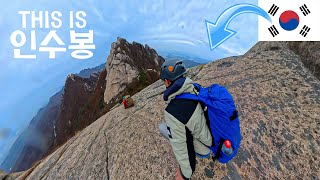
Watch the descents (Pigeon and summit)
Pigeon descent · the descent itself · Joel Bennett

Where to look things up
- Current management information: the KNPS Bukhansan control page and rock-use service cover named restrictions and the application entry point respectively.
- Transport and hiking approach: official Seoul tourism directions and the KNPS Baegundae course. Distinguish the tourism center, trailhead, Baegundae summit and climbing start.
- Guidebooks: Grades and route counts here come mainly from online databases; the guidebook is the authority. This article also directly checks the following 2012 guide tables and preserves differences with the newer regional topo.
- Climb: Rock Climbing in Korea, Dong-il Ryou and Jonn Jeanneret, Outdoor Global (아웃도어글로벌), first edition 2012. English descriptions, with Korean place and route names; selected roped crags across Korea. Insubong occupies printed pages 230–237. It is not a source for present transport or access rules.
- Insubong – East Face, produced and published by Mont Blanc Lines, initial version May 18, 2025. English description, Korean and romanized route names; a digital East Face topo, licensed for personal use, rather than a whole-crag guide.
Update history
- 2026-10-26: Added Korean-language data to each route (community route table, 2004 southeast-face poster, WAC and NEPA topos, the redrawn 2008 《사람과 산》 topos, Monthly Mountain’s 2004 column and more), each linked, with differing grades and lengths shown side by side; 22 routes gained a location from these sources.
- 2026-10-26: Merged route data from theCrag (96 entries) and Mountain Project (26 routes): 28 new routes (including 5.12 lines such as My Way, Alpha 30 and Blue Mountain, and short lines at the base), with both databases’ grades, lengths and pitch counts added to existing rows, taking the guide from 65 to 93 routes; 58 new route videos, with videos now on 50 routes instead of 19.
- 2026-10-26: Each route’s notes now open with "Sources:" linking the topo, guide page, theCrag, Mountain Project, Monthly Mountain or community concept map that row relies on, so readers need not jump to the references.
- 2026-10-25: Dropped the separate "Classic routes: East Face and south face" section and folded its ten lines back into the grade tables; added 49 routes from all 43 numbers on the 2025 East Face topo and the 2012 guide’s route table (including the west face, south side and short lines at the base), taking the guide from 16 to 65 routes, each with its source and topo number.
- 2026-10-25: "Route logs online" repeated the same ten lines as the classic-route tables; its links and extra details now sit in each classic route's notes, and the separate section is gone.
- 2026-10-25: added the fatal fall of 4 October 2026 to "Rules before you go"; the introduction now links to the new list of Korean topo drawings in the route notes.
- 2026-10-25: corrected the sub-area of Lonely Road and Pigeon (Lonely Road is on the far right of the East Face, past Chouinard A; Pigeon is on the south side by the descent point; "West face" was wrong).
- 2026-10-25: added sources and location for Insu B (Mountain Project: 5 pitches / 136 m; several reports 6 to 8; the current way starts up Yongam Slab), noted that the 2012 guide's 3 pitches / 97 m are only the lower part and that it is not Seolgyobyeok; fixed the explanation of "—".
- 2026-10-25: corrected the 2025-topo column for Lonely Road (the topo does include it, as #38 at 5.6); its length and pitch count are still only from theCrag.
- 2026-10-25: added a link to the pitch-by-pitch route notes (starts, pitch lengths and descents) and stated that this guide is not a topo.
- 2026-10-22: Added a community-route-logs section with a 10-row comparison table (Crony, Insu Ridge, Amidong, Medical School, Rescuer, PASI, Sanchonji, Dongyang-gil, Haneul-gil, Georyong-gil), noting that the loop-table pair (걸리 2018 / 도랫굽이 2012) and the Daum repost are the same source family, not independent confirmations; fixed Crony pitch-6 crack, Georyong founder surname “고 전재운”, and moved Dongyang-gil’s 8-pitch table attribution to Imgok plus community tables. Added 16 reference links.
- 2026-10-22: Added route videos for Insu A, Wand, Maninbo and Villa, and extended the intermediate and advanced tables with video columns; added a west-face approach POV and a 70 m double-rope summit descent, with notes on how those versions differ from the guidebook.
- 2026-10-21: Keep the route comparison table intact with video thumbnails beside each route; open the selected route’s videos on demand in a vertical playlist with separate preview images and open buttons to avoid accidental activation while swiping; external video rows identify YouTube as the destination and indicate a new tab.
References
- Official Seoul tourism: Baegundae–Ui Gugok Trail
- KNPS: Baegundae course
- KNPS: Bukhansan control details
- KNPS: Rock-use service
- Seoul Alpine Federation: Reproduced 2026 thaw restriction notice
- Monthly Mountain: Bukhansan reporting controversy, 2025
- Korean Alpine Club: Rick Ruffin, Insubong Climbing
- Climb: Rock Climbing in Korea book listing
- Mont Blanc Lines: Insubong – East Face, 2025
- Today News: Climbing Insubong's Amidong route, 2014
- Monthly Mountain: Insubong's Insu Ridge, 2009
- Monthly Mountain: Insubong's Haneul-gil, 2016
- Monthly Mountain: Insubong's Georyong-gil, 2016
- Monthly Mountain: 50 years since the Medical School route, 2022
- Imgok: Korean rock routes (1), Insubong Dongyang-gil, 2012
- National Fire Agency: Public EMS
- KBS: Woman in her 60s dies after fall while climbing Insubong, 2026-10-05 (Korean)
- Yonhap: Woman in her 60s dies in Insubong climbing fall, 2026-10-05 (Korean)
- BMC: 2025/26 Insurance Product Information Document
- Mountain Project: International climbing grade comparison
- Mountain Project: Insu B
- 산지니: Insubong Crony-gil, 2010
- 청아 (김종만): Insubong Insu Ridge, 2006
- 도랫굽이: Insubong Insu Ridge concept, 2013
- 도랫굽이: Insubong front-face diagram, 2012
- 구름에 달가듯이 (걸리): Insubong concept map, 2018
- Daegu WITH Climbing Center café: Insubong route list (repost, original 걸리), 2014
- 泰山峻嶺: Insubong Amidong-gil, 2018
- 泰山峻嶺: Insubong Dongyang-gil, 2022
- 머루랑: Insubong Medical School route, 2013
- 소소한 기억들: Insubong Medical School climb, 2019
- 킬러 & 山: Insubong Rescuer route, 2013
- 파워: Insubong route digest, 2013
- 킬러 & 山: Insubong PASI, 2010
- 달빛나그네: Insubong Sanchonji, 2024
- 울트래블러 (채울): Insubong single-pitch day, 2022
- 古山: Insubong Georyong-gil, 2007 (published)